
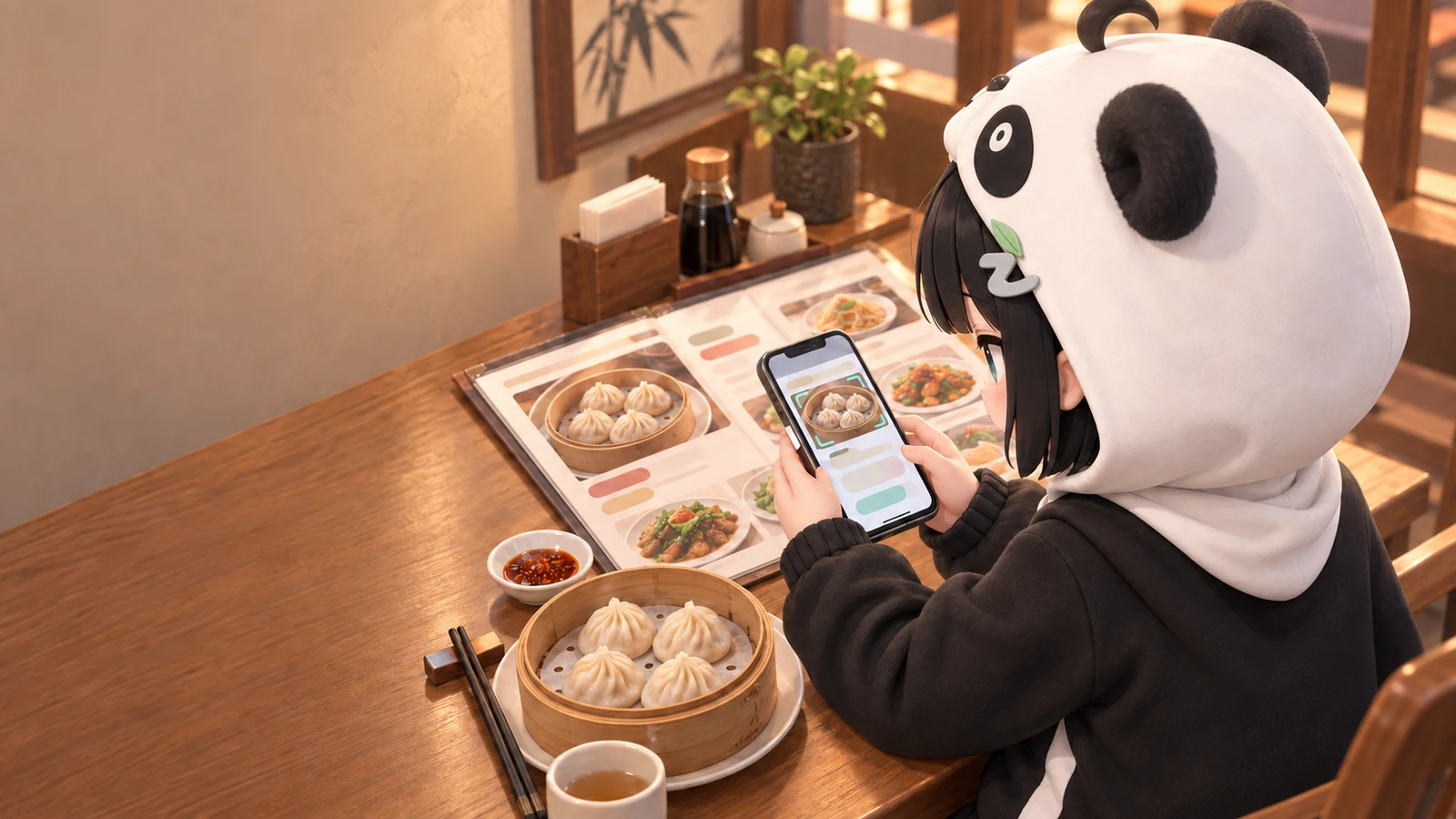
Chinese menus range from clear picture menus to handwritten boards and poetic dish names. A literal translation may tell you the characters without telling you what will arrive. The most reliable workflow combines a readable photo, dish-level context, and a short confirmation with the restaurant when an ingredient matters.
Start with a photograph the software can read
Camera translation improves when the text is flat, bright, and large enough to inspect. Hold the phone parallel to the page, avoid glare, and include the whole dish row so the name, price, and section remain connected. If a menu is long, photograph one section at a time rather than capturing an entire wall from across the room.
- Use the original image, not a compressed screenshot of a messaging app.
- Keep headings visible; they often distinguish noodles, cold dishes, drinks, or set meals.
- Retake blurred characters instead of trying to infer them.
- Check that the translated result points to the correct row and price.
Translate the dish, not just each character
Some dish names describe an ingredient and cooking method directly. Others refer to a place, person, appearance, or story. Translating character by character can therefore produce an amusing phrase that says little about the food.
A useful interpretation should try to identify:
- the main ingredient;
- the cooking method, such as stir-fried, steamed, braised, grilled, or served cold;
- the likely sauce or flavor profile;
- spice level when the menu provides a signal;
- whether the item is a full dish, side, soup, drink, or staple food.
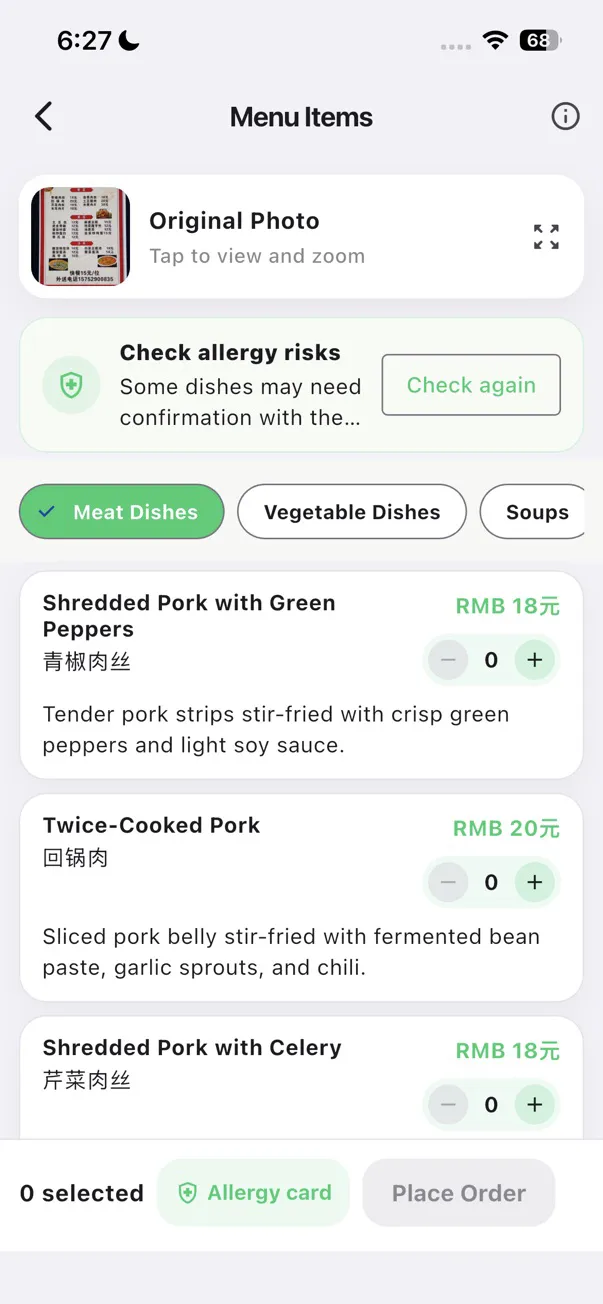
TravelPanda's menu tool is designed around this dish-level problem: photograph a menu, review translated items, and use the result to narrow your choices. A translation remains guidance, not a guarantee about every ingredient or preparation surface.
Use short follow-up questions
A long translated paragraph is difficult to answer in a busy restaurant. Ask one concrete question at a time and show it on screen. These examples can help you prepare the structure of the question:
| What you need to know | Chinese | Meaning |
|---|---|---|
| Does this contain meat? | 这道菜有肉吗? | Does this dish contain meat? |
| Can it be made without chili? | 可以不放辣椒吗? | Can you make it without chili? |
| What is the main ingredient? | 主要食材是什么? | What is the main ingredient? |
| Is this enough for one person? | 这份一个人吃合适吗? | Is this portion suitable for one person? |
Polite, specific questions are easier to confirm than broad labels such as “healthy,” “light,” or even “vegetarian,” which may be understood differently in different kitchens.
Treat allergies as a separate safety task
If exposure could cause a serious reaction, do not rely only on a dish name, photo, icon, or AI-generated ingredient list. Sauces, oils, garnishes, shared utensils, and cross-contact may not appear on the menu.
Prepare an allergy card that states the exact allergen, the seriousness of the reaction, and whether traces or shared cooking oil are unsafe. Have a fluent speaker or qualified translator verify it before the trip.
Show the card to staff and wait for a clear confirmation. If the answer is uncertain, choose another dish or restaurant. Translation tools can reduce language friction, but they cannot inspect a kitchen or certify that a meal is safe.
Vegetarian and religious dietary needs also need detail
Instead of relying on one dietary label, identify the ingredients and preparation rules that matter to you. For example, clarify whether meat stock, lard, fish sauce, egg, dairy, or alcohol is acceptable. This gives staff a question they can answer about the actual dish.
Save the relevant sentences before the meal. TravelPanda also includes practical Chinese scenarios and saved phrases, which can help you prepare wording for restaurants, hotels, taxis, shopping, directions, and emergencies.
Keep the original Chinese visible
Do not replace the source text with translation and then discard it. Keeping the Chinese name beside the translated explanation helps you:
- point to the correct item when ordering;
- compare the result with another translation;
- ask staff about the exact dish;
- recognize the dish again later;
- avoid confusing two similarly priced rows.
A simple menu workflow
- Photograph one readable menu section.
- Check that dish names and prices align with the correct rows.
- Shortlist two or three dishes based on main ingredient and cooking method.
- Ask one specific question about spice, meat, portion, or another important detail.
- For an allergy or serious restriction, show a verified message and obtain clear confirmation.
- Keep the original Chinese dish name visible when placing the order.
The goal is not a perfect literary translation. It is enough trustworthy context to make the next decision—and a clear path to ask when the answer matters.